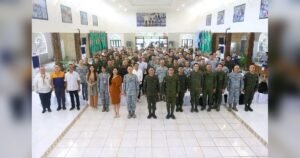
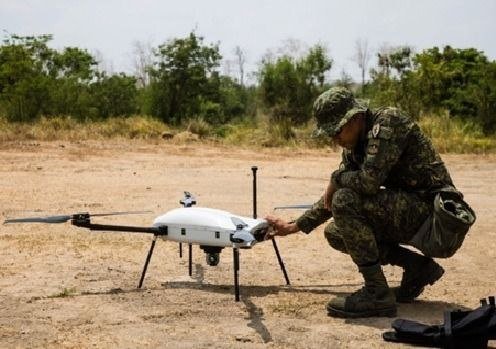
Soldiers from the US Army Pacific’s 25th Infantry Division joined their Philippine Army counterparts at Fort Magsaysay in Nueva Ecija for intensive Small Unmanned Aircraft System training on April 10, 2026. The collaborative exercise forms part of the first phase of Exercise Salaknib 2026, designed to strengthen bilateral defense cooperation and technological integration between the two allied nations.
Personnel from the Philippine Army’s 3rd Mobile Brigade participated in the comprehensive training program, which emphasized enhancing operational compatibility and supporting the Philippines’ strategic Archipelagic Defense Concept through advanced unmanned systems integration.
Strategic Defense Modernization Initiative
The joint training exercise represents a crucial component of the Philippine Army’s broader Land Domain Transformation program. Military officials report that the program provided extensive practical experience with cutting-edge unmanned platforms specifically designed to maintain distributed combat effectiveness in challenging operational environments.
Participants focused intensively on incorporating live aerial reconnaissance intelligence into tactical ground operations, establishing essential competencies for contemporary multi-domain warfare scenarios. This technological integration marks a paradigm shift in ground force capabilities, enabling enhanced battlefield awareness through sophisticated aerial intelligence gathering.
The comprehensive training curriculum covered operation of multiple unmanned aircraft configurations, including advanced First-Person View drone systems and sophisticated vertical take-off and landing platforms provided by Philippine Army units. This diverse technological exposure ensured participants gained familiarity with various operational scenarios and tactical implementations.
Bilateral Technical Cooperation
Philippine Army technical specialists demonstrated their indigenous UAS control station capabilities to visiting U.S. Army trainers in a remarkable display of collaborative military partnership. This technical demonstration marked an important achievement in the Philippine military’s progression toward achieving comprehensive Self-Reliant Defense Posture objectives.
The reciprocal learning framework ensured Philippine military personnel developed expertise with contemporary, domestically-produced, and integrated defense technologies. This methodology supports the overarching goal of building sustainable indigenous defense capabilities while preserving vital international military partnerships.
American military instructors delivered specialized instruction on sophisticated operational methodologies, while their Philippine counterparts presented locally-engineered systems and established procedures. This bidirectional knowledge transfer strengthened technical proficiencies across both military organizations.
Comprehensive Combat Preparedness Training
Exercise Salaknib 2026 extended beyond unmanned aircraft operations to include extensive instruction on tactical movement procedures. Combined forces from both the Philippine Army and US Army Pacific 25th Infantry Division practiced advanced tactical protocols aimed at improving multi-domain operational readiness and integrated combat effectiveness.
The tactical movement curriculum concentrated on preparing ground forces for sophisticated operational theaters where terrestrial mobility and aerial reconnaissance capabilities must function in seamless coordination. These competencies prove vital for maintaining strategic advantages in contemporary military engagements.
These joint military exercises demonstrate credible regional deterrent capabilities, highlighting the improved effectiveness of allied forces operating in coordinated fashion. The training program builds upon established defense relationships while demonstrating sophisticated technological integration achievements.
Implementation of Archipelagic Defense Framework
The unmanned aircraft system training directly advances the Philippine Army’s Archipelagic Defense Concept, addressing the distinctive geographical requirements of protecting a dispersed island nation. These unmanned platforms deliver essential surveillance and intelligence-gathering capabilities across extensive maritime and land-based operational areas.
This strategic framework emphasizes developing distributed defensive capabilities capable of effective operation throughout the Philippine archipelago’s varied topographical challenges. Compact unmanned aircraft systems provide operational flexibility and extended range necessary for monitoring isolated regions while delivering continuous real-time intelligence support.
Advanced drone technology integration allows ground forces to expand their operational scope while maintaining comprehensive situational awareness across simultaneous multi-domain operations. This capability proves especially valuable in archipelagic settings where conventional surveillance approaches may encounter significant geographical constraints.
Indigenous Defense Capability Enhancement
The training initiative furthers the Philippine Army’s Self-Reliant Defense Posture program, focused on cultivating domestic defense capabilities while preserving robust international military alliances. The SRDP emphasizes achieving mastery of both foreign-sourced and domestically-manufactured military technologies.
Philippine Army specialists exhibited competency with locally-engineered UAS control systems, demonstrating significant advancement in domestic defense technology development. This capability diminishes reliance on foreign military systems while ensuring personnel can effectively operate diverse technological platforms.
This approach reflects a strategic balance in defense modernization combining allied military cooperation with indigenous capability enhancement. The strategy ensures sustainable long-term defense capabilities while preserving operational compatibility with allied military forces.
Exercise Salaknib 2026 Framework
Exercise Salaknib 2026 continues the established pattern of regular bilateral military training between Philippine and American forces. The multi-phase exercise encompasses various training modules designed to strengthen different elements of military cooperation and capability enhancement.
Initial phase operations at Fort Magsaysay concentrate on tactical-level instruction and technology integration, establishing groundwork for increasingly complex operations in following phases. This structured approach enables thorough skill development across numerous military specializations.
The exercise maintains the longstanding tradition of Philippine-American military collaboration while incorporating emerging technologies and operational doctrines. Subsequent phases will expand upon the unmanned aircraft system training foundation developed during this initial training period.
Photo credit: Photo courtesy of CMOR, PA, and US Army DVIDS